Patience Training Hub
Three small games for the minutes you spend waiting. Interaction Design, RIT, Spring 2026.
I owned the concept, the mechanics, the visual system and the design calls, and built the games with Claude writing the code. It is deployed with Figma Make.
Try it
This is the deployed hub, running inside the page. Stack & Settle is open. The other two unlock as you pass.
The deployed hub opens in a new tab. Stack & Settle is open. The other two unlock as you pass.
Open the hubOpen it in a new tabIt started with a checkbox
The first thing I made was a fake "I'm not a robot" checkbox that never finishes. It says Checking, then Verifying behavioral pattern, then Almost there, and it keeps you there. I built it in Figma Make to map how a system holds a person by making the wait feel almost over.
Then I turned it around and treated the wait as a short training session with rules.


Three states of the checkbox test.
Three games, three ways of holding back
Each game trains one habit. They unlock in order, and after the third the level goes up and everything gets harder.
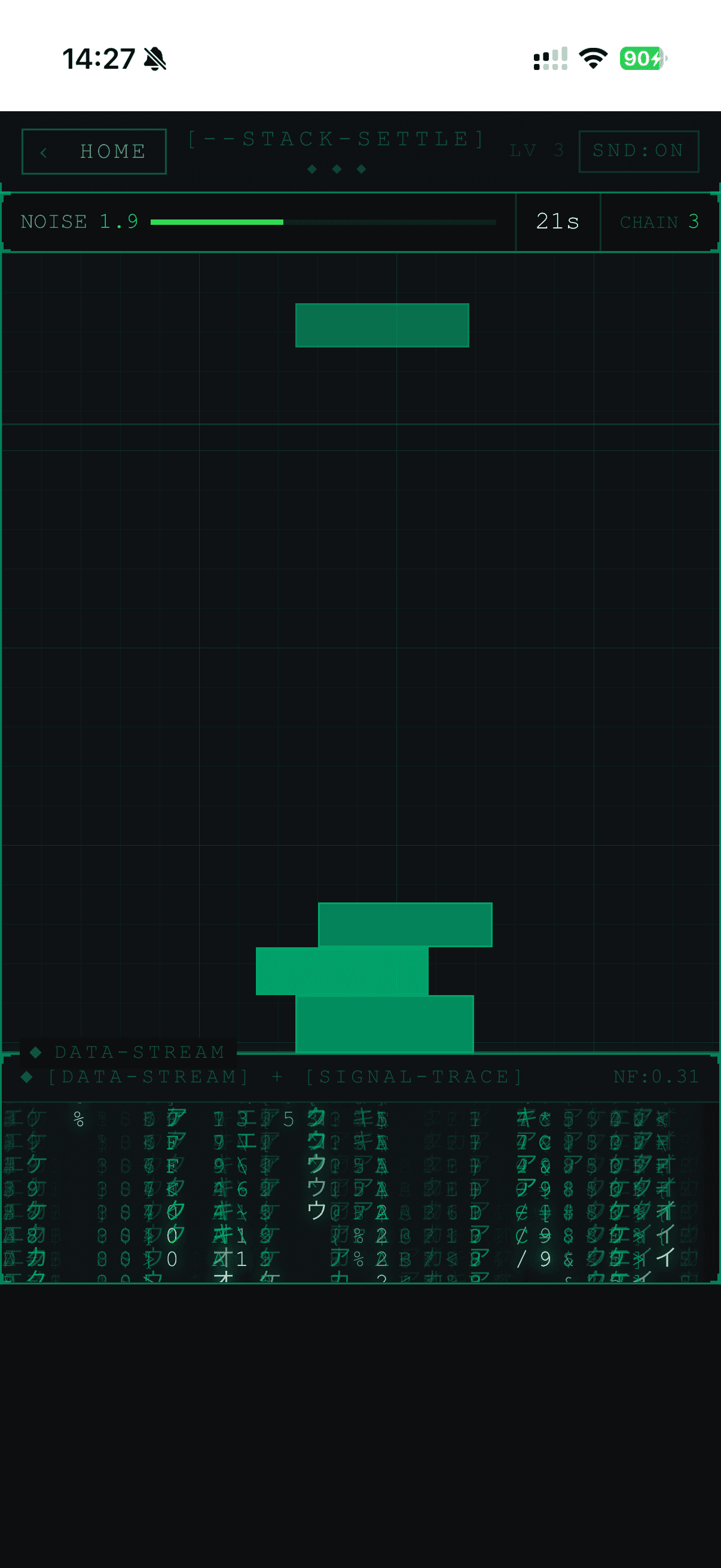
Stack & Settle
Timing restraint
A block sweeps left and right above the tower. Tap to drop it. A clean drop lowers the noise, and the noise sets how fast the block moves. If the tower falls the run is over. Stay up for 60 seconds to pass.
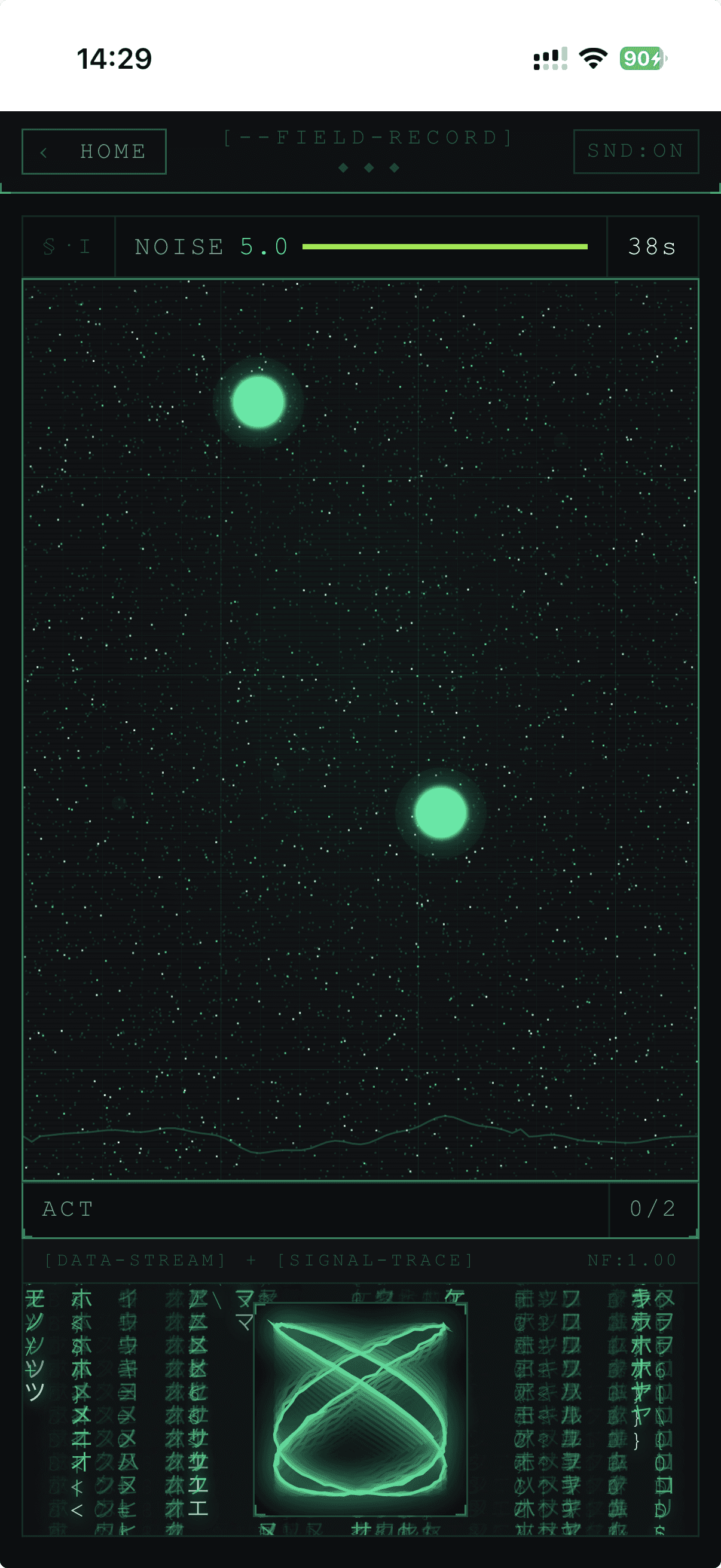
Whack-a-Glitch
Tap discipline
A scan line crosses a field of nodes. Wait for the scan to finish, then tap only the glitch nodes. A wrong tap lowers the rating. A B rating or better opens the last game.
Signal Clamp
Hold regulation
Hold to rise, release to fall, and steer the signal through the gaps. You get three lives and 40 seconds. Eight points finishes it.
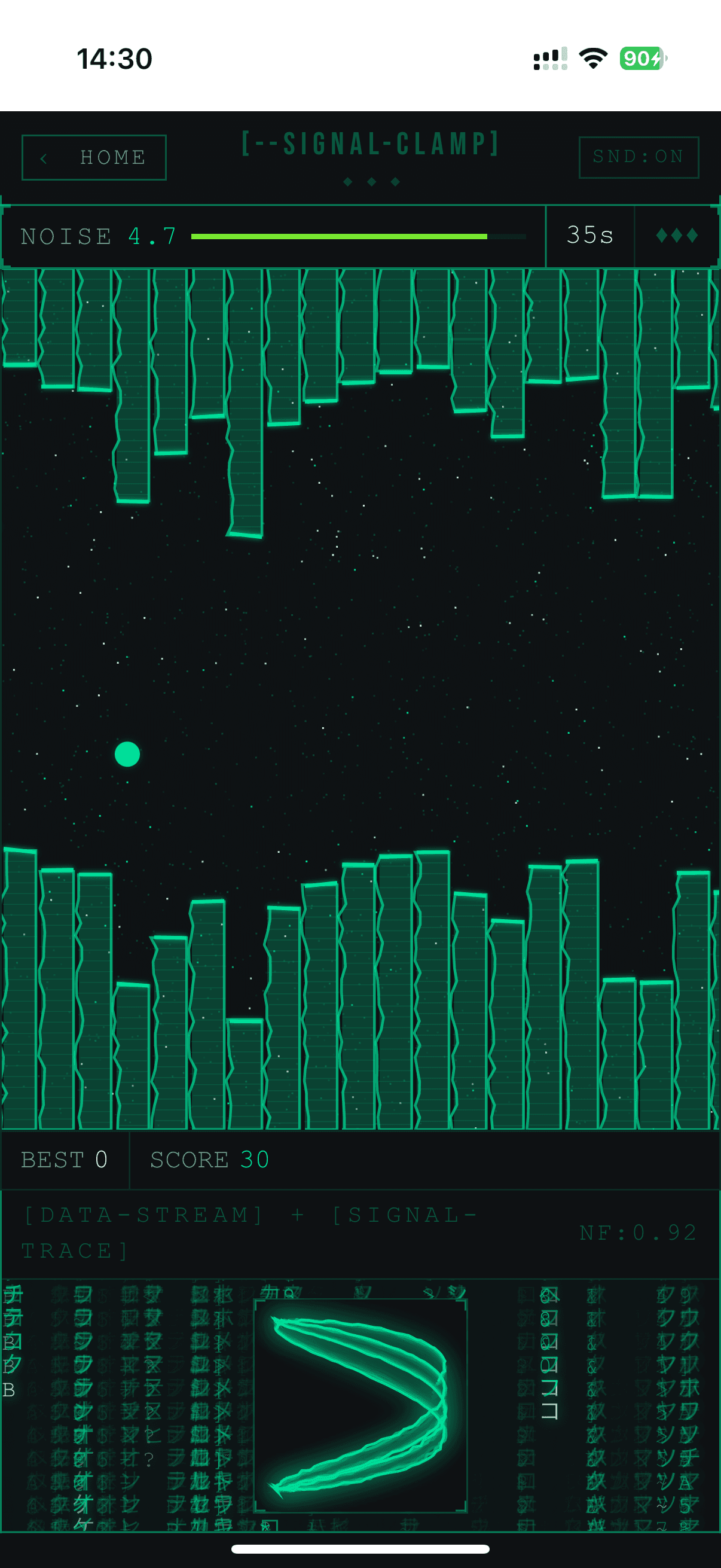
Every start screen is a title, three lines, an animation and a START button.
It was white, then paper, then green
The first version was called Waiting Companion and had grey dots on white. The second, Field Record, was warm paper with Courier and amber. The last one is black with phosphor green, set in Bebas Neue and Courier New, like an old oscilloscope. I wanted it to feel like an instrument.


Working with AI
I tested the early concept in Figma Make and deployed with it. I set the concept, the mechanics and the visual system, directed Claude on the game code, and chose which options were worth building.
One example. In an earlier version of Signal Clamp, players could not tell how close they were to the capture point, so holding felt like guessing. I kept the question to mechanics only and asked for options. Three came back. I took the arc progress ring because it answered the complaint. The other two were atmosphere.